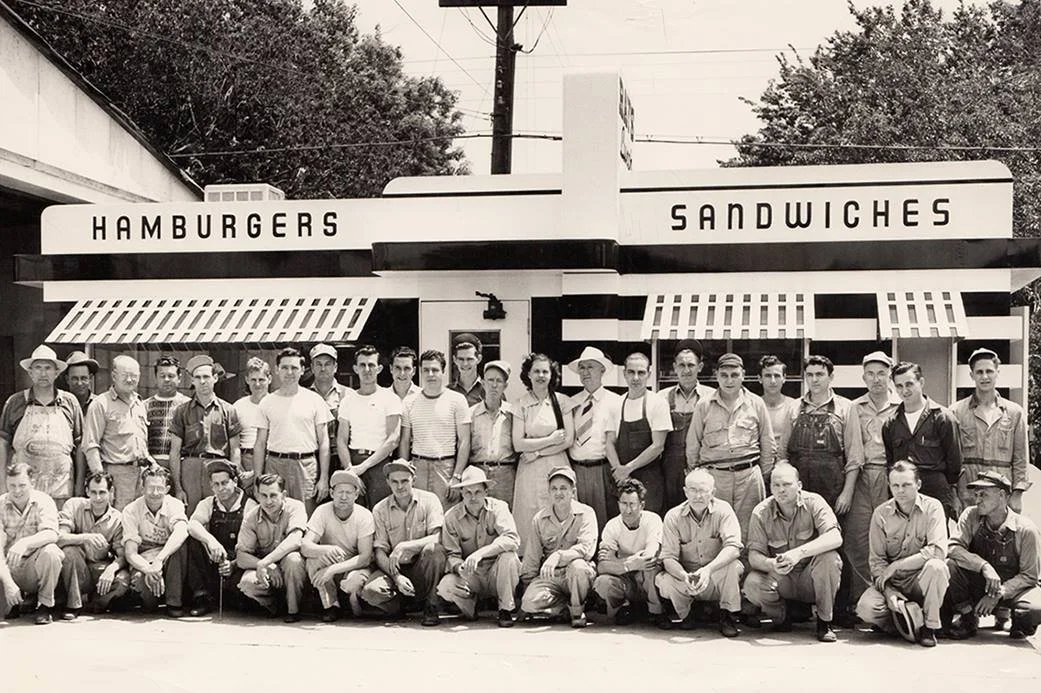
A taste of history…
“These diners were completely prefabricated in Wichita, Kansas, and shipped ready to install — they were basically “mail‑order” diners.”
“Valentine offered financing to the operator, making regular payments by placing a portion of daily earnings into a lock‑box/safe attached to the doorway.”
“The diner models were very compact: many had only 5‑10 stools around an L‑shaped counter and no tables, meaning many customers stood or perched at the counter.”
America’s Original Mobile Eateries
Long before food trucks rolled across city streets, Valentine Diners were hitting the highways, bringing quick meals to towns across the U.S. The story begins in Wichita, Kansas, with Arthur Valentine, who in the 1920s and 1930s saw a growing road culture and envisioned small, portable diners that could be transported on flatbed trucks—perfect for busy corners or highway stops.
Early Valentine Diners were simple—“glorified sandwich stands” with stools tucked around a counter. Their charm wasn’t luxury; it was clever design and mobility. A little secret added intrigue: a wall safe near the door holding a percentage of the day’s profits, collected by Valentine representatives on regular routes.
During the postwar era, Wichita’s factories, skilled from building planes, provided the perfect environment for Valentine’s vision. Arthur Valentine hired local designer Richard Ten Eyck (later known for the Beechcraft Bonanza, Black & Decker, and the Vornado fan) to refine his boxy prototypes into sleek, modern diners. These diners featured smooth white panels, large windows, a simple grill, and room for about eight stools—no bathrooms, just steel optimism.
Fun fact: Ten Eyck initially wasn’t paid; he settled his invoice by trading his drawings for one of Valentine’s experimental home bars.
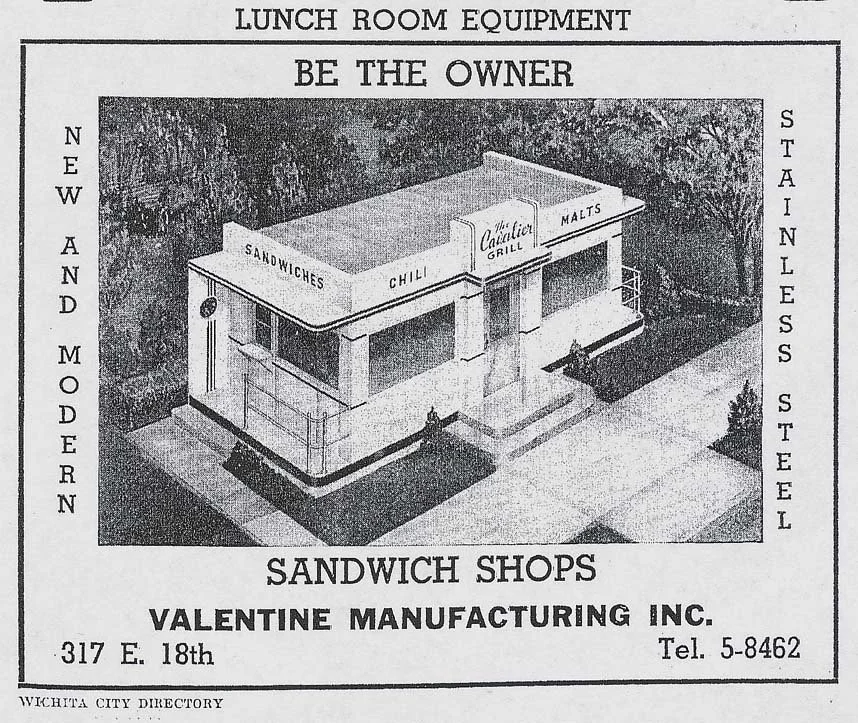
Our diner is the same “Sandwich Shop” model appeared in the first ad for Valentine Manufacuring.
“Today, Valentine Diners still dot the U.S., often under new names. A few design hints—streamlined exteriors, small footprints, and an unusual attention to aesthetics—can reveal a Valentine origin. From humble beginnings to sleek, mobile designs, Valentine Diners captured the spirit of mid-century America: efficiency, mobility, style, and a little secret tucked inside.”