
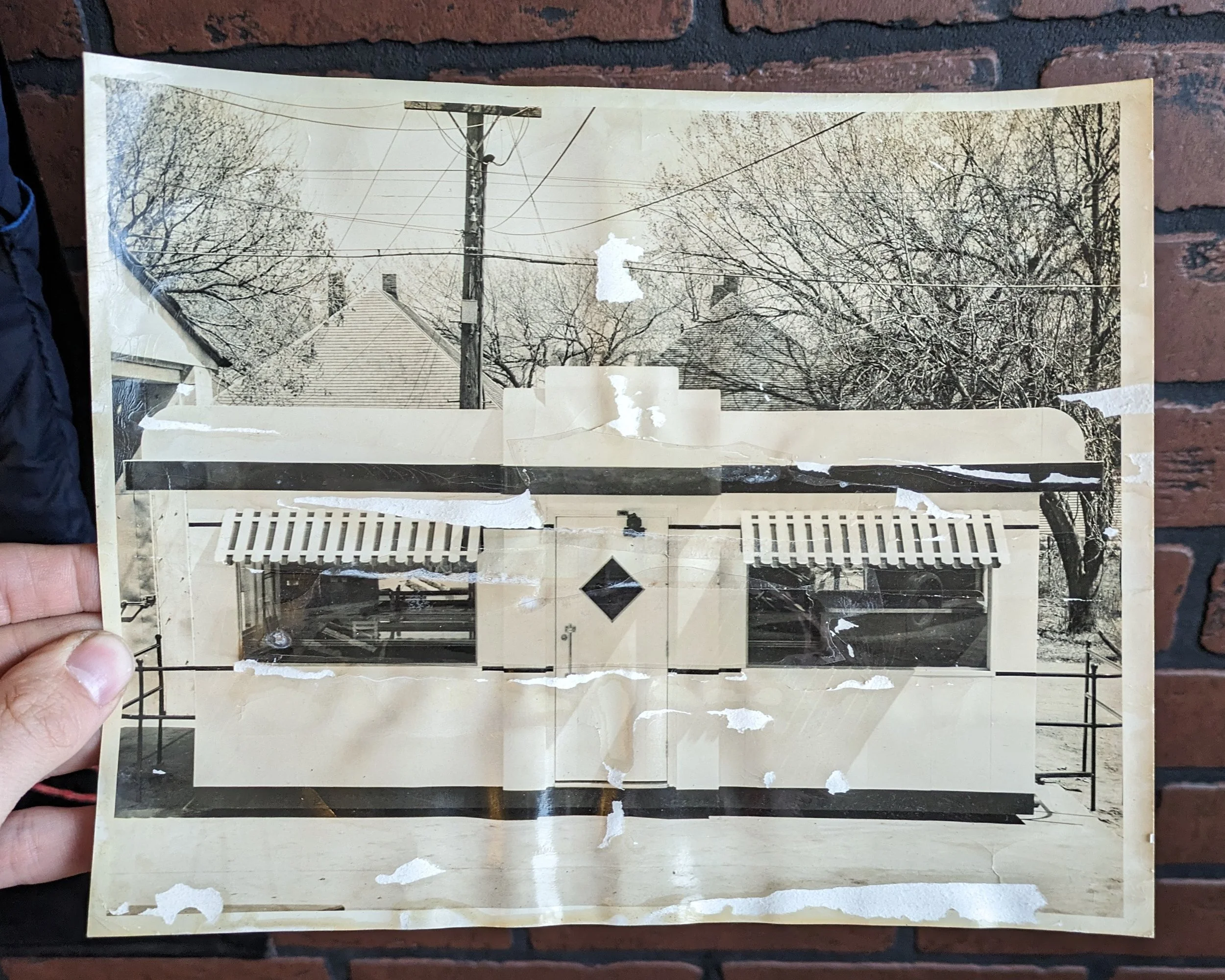
My small town is pulled straight from a Norman Rockwell painting — a downtown listed on the National Register. We’ve got a neon-lit theater, a WPA-era post office, the old depot, a row of Victorian storefronts, and an original truck dealership, even a few tourist. I’d already restored the old five-and-dime building, but something still felt missing. I’ve done my civic duty — volunteering on various boards and helping with community projects — but our downtown needed a true attraction. What we lacked was that vintage-style diner, the kind of place you’d make a road trip for. Not an East Coast stainless-steel trolley, but a genuine Midwestern spot — the heart of town kind of place.
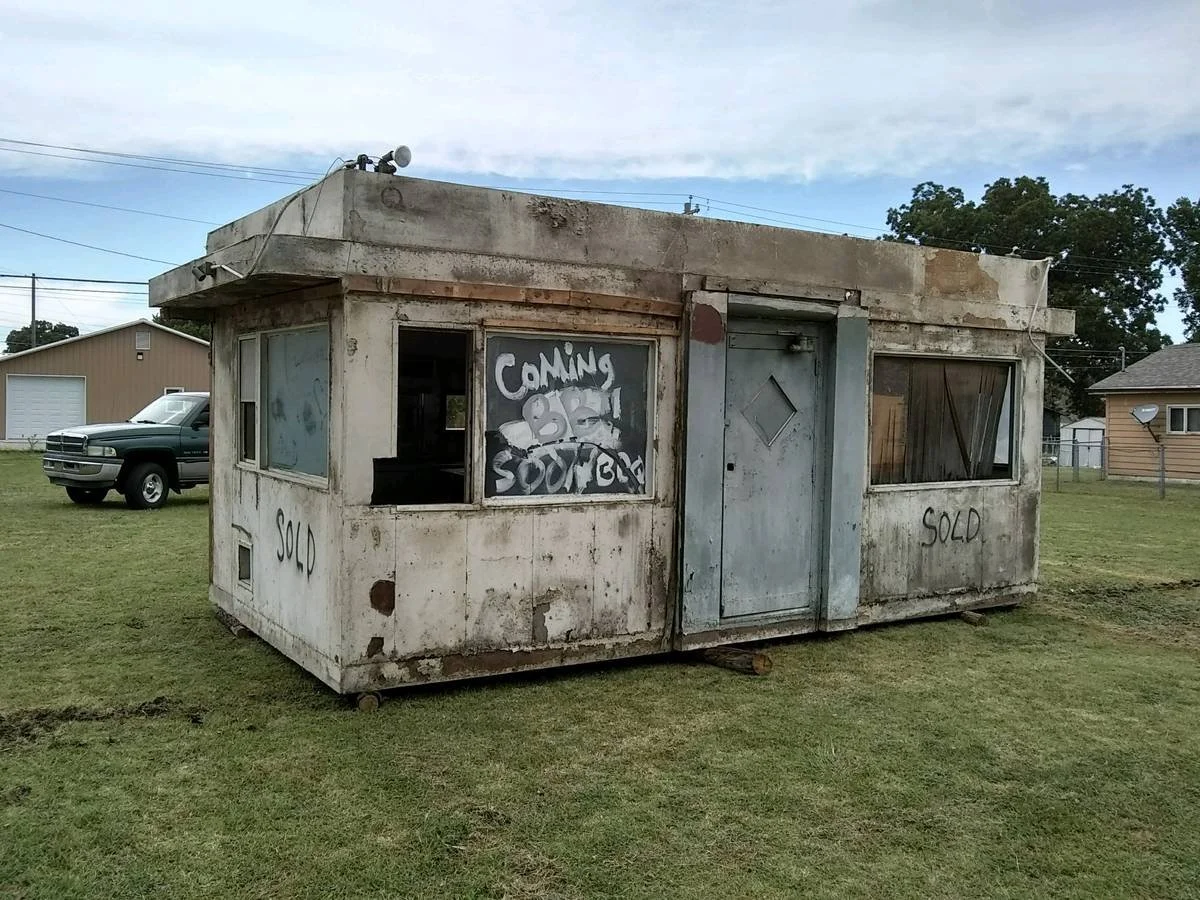
I’ve been fortunate in life, but none of my projects have ever come easy. It’s always been hard work, tight budgets, and a lot of persistence to make things happen. Still, I couldn’t just find a diner and bring it to town — not yet, anyway so the dream is mothballed. Fast-forward to the summer of 2023. Word gets to me about a structure uncovered during a condemned building demolition in Winfield, Kansas — something that had been walled in and hidden for over 50 years. Curiosity got the best of me, sent an text to the guy who tipped me off and by the next morning I was on the road. One of those early designed diners is what they found hidden inside an condemned building in Winfield. Bob had seen it emerge from its hidden time capsule as each board came down and acted quick to save it from the crusher — pulled it aside while the rest of the building came down and spray-painted “SOLD” on the sides just to keep the hovering scrappers away. The exterior looks rough: lots of nail holes from years of cover-ups, a few cuts and hacks here and there — but nothing rusted out, nothing beyond repair.
There was no mistaking it — a real-deal Valentine Diner, one of the early postwar models built right in Wichita, Kansas, by the Valentine Manufacturing Company — interior untouched and intact.
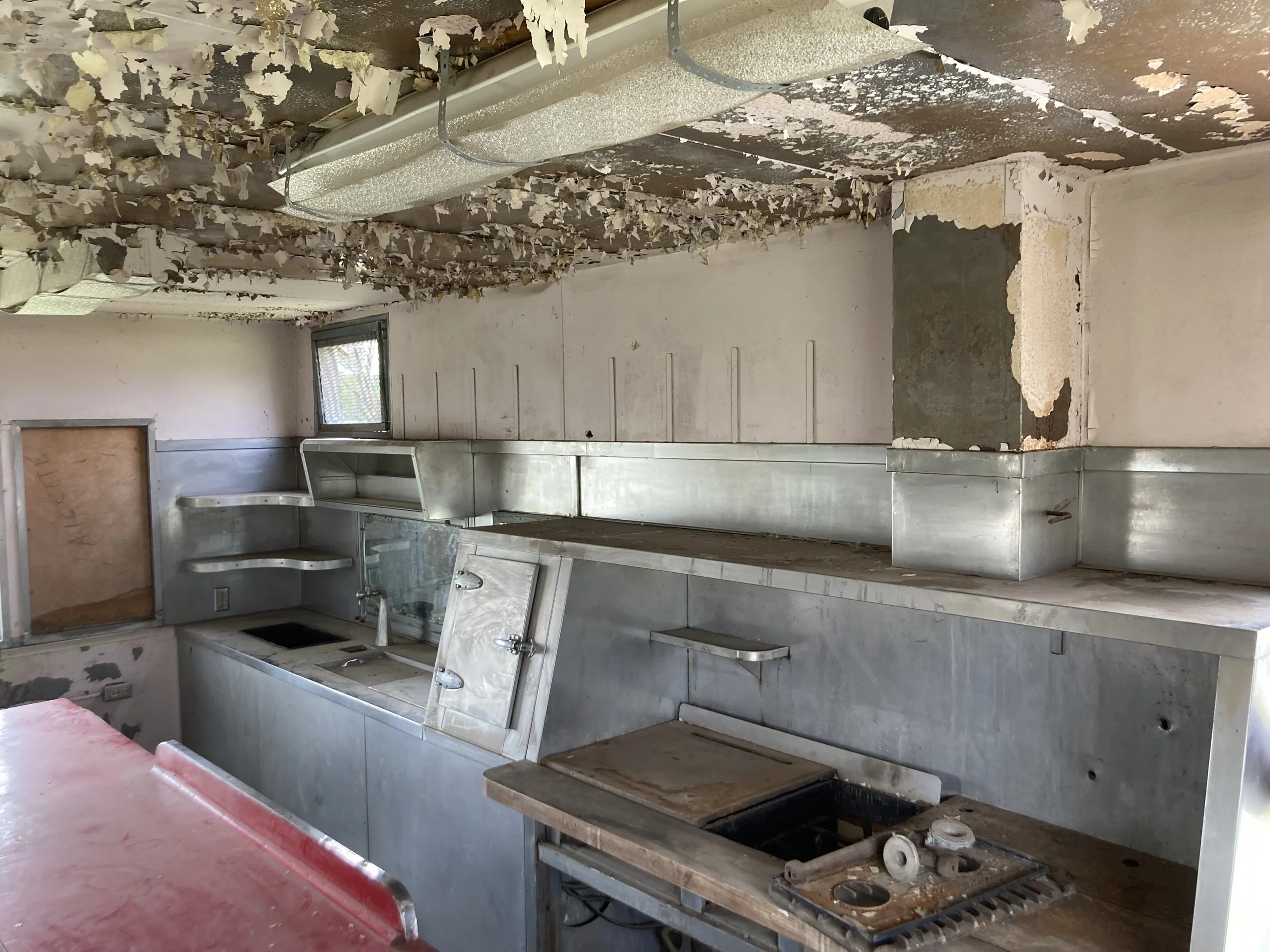
What really surprised me was the inside. It’s completely intact and in remarkable shape. You go to a brand-new Dairy Queen, and the freezer door’s already beat to hell — but this one? Mint. Even the pie safe glass is still there. Nothing’s missing or destroyed; every stainless drawer is right where it should be. And then the kicker — Valentine’s own payment wall safe, still mounted in place. Beneath the layers of old paint, I found the stamp: Valentine Diner #662. Confirmed — one of the very early “Sandwich Shop” models, straight out of the Arthur Valentine Ten Eyck’s original drawings.
The cozy little diner time left untouched.
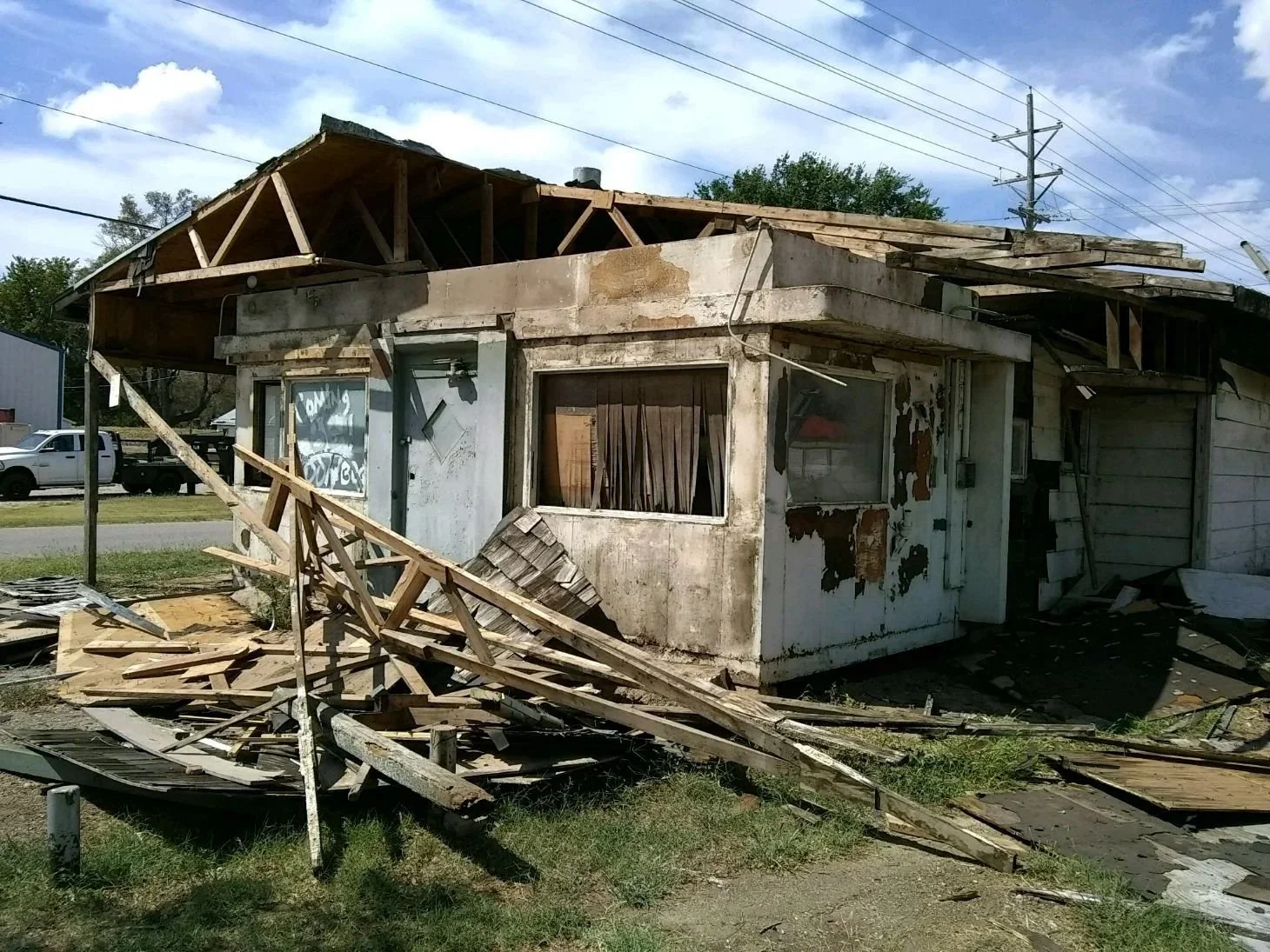
I was anxious to learn the history—beyond how to move it, restore it, or what to do with it.
Luckily, Bob put us in contact with Mr. Cochran, and that opened the door to most of the story:
where it came from, how it lived, and how it eventually vanished from the landscape.
The story only goes back so far, and we’re still searching for more—but here’s what we know.
Early Years (1948?–1952)
Sometime between 1948 and 1952, the Little Diner was delivered and set up on or near the old Boeing plant on property that was then the Wichita Airport. We can only imagine how many Rosie-the-Riveters grabbed a quick bite during breaks while working on Cold War Stratocruiser planes. It must have been a lively spot.
Air Force Expansion and the Move
By the early 1950s, the newly formed U.S. Air Force wanted to expand in that exact area. Deals were made, Wichita built a new airport, and in 1952 the old airport property officially became McConnell Air Force Base. Our little Valentine, along with a few other buildings, was moved to a storage lot—its first decade-long slumber.
The Cochran Connection
Enter Tommy Cochran, Mr. Cochran’s father, stationed at McConnell in Wichita in the late 1960s. One day he asked about the buildings sitting on the storage lot, and a deal was struck.
Valentine No. 622 made its second journey—this time 38 miles south to the edge of Winfield, Kansas.
For a few years it operated as the Valentine stand until his son returned home from Vietnam (thank you for your service!). With his son’s help, T.C. Cochran’s became a beacon, smoke stack and all, serving pit BBQ and hot links. A roughly 10-foot addition was built onto the back with a side door, and a roof was added above. A small pass-through was cut into the back of the original diner, the counter was shortened, and the diner became the pickup window for to-go BBQ orders. Later discoveries show that Schlitz Beer was the brew of choice.
Growth, Change, and Disappearance
The pit BBQ took off quickly—so quickly that big changes followed. A full structure was soon built around the diner, completely encapsulating it. The original streamlined front, the windows, and the Valentine design were hidden beneath shingles and walls, with only the front door and two windows faintly visible. The BBQ stand evolved into a lounge—T.C.’s Lounge—and remained a success. On that very dance floor, young Mr. Cochran even met his future wife.